
Mystery Science partners with Google to bring eclipse glasses to elementary school students


Assuming you haven’t been living in a cave — in which case this news wouldn’t interest you anyway — you know there’s a solar eclipse happening on August 21st. It’s the first solar eclipse to cross the United States since 1918 and the last one before 2045, so it’s no surprise that a lot of people are quite excited about this one. Unsurprisingly, a large number of science teachers are also getting ready to turn this into a teachable moment, but to do so, they do need to be able to give their students eclipse glasses — because the last thing you’d want is a bunch of kids staring right into the sun without protection.

It’s no secret that Google has teamed up with a number of organizations, including the Gordon and Betty Moore foundation, SSI, the National Science Foundation and NASA, to distribute 2 million of these solar-viewing glasses to almost 5,000 libraries throughout the country. In addition to this, Google has also teamed up with Mystery Science, a Y Combinator-incubated startup that provides lesson plans to teachers, to directly ship up to 15,000 free glasses to elementary schools.
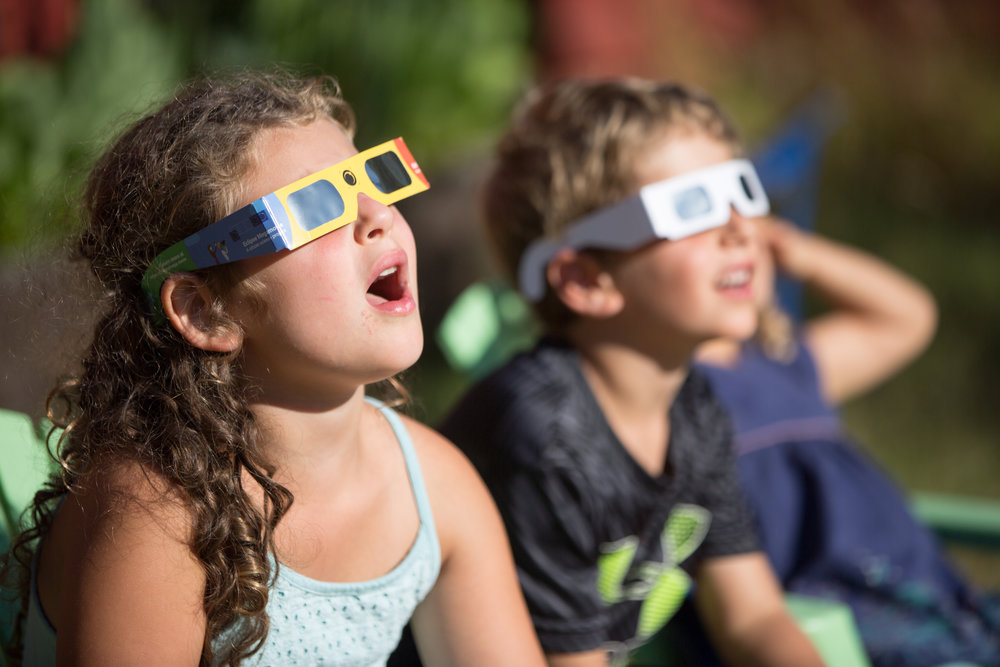


Mystery Science co-founder Doug Peltz tells me that he’s been waiting for this eclipse since he was eight years old. He and his team, including co-founder and former Facebook product manager Keith Schacht, wanted to make sure that elementary school teachers who weren’t able to get any of the free glasses at their local libraries would also be able to provide their students with access to these glasses. So they reached out to Google and teamed up with the company to ship glasses to schools, in addition to providing teachers with free lesson plans to prepare their students for the event.


The project’s homepage also features a nifty eclipse time checker so you don’t miss it (which, unless you’re used to the day turning dark in the middle in the morning, is unlikely, of course).

Mystery Science’s lesson plans are currently in use in 10 percent of elementary schools in the U.S., where many elementary school teachers aren’t necessarily prepared to teach science (or even fully understand the curriculum they are supposed to teach). Teachers can buy individual memberships to the service, but, as the founders tell me, many school districts now buy licenses for all of their teachers.

Whether or not you’re a paying subscriber, if you’re an elementary school teacher, you can now get Mystery Science’s eclipse lesson plans and glasses for free.

More@ https://www.technapping.com

Source: Techcrunch

Comments

Popular posts from this blog

WTF is bitcoin cash and is it worth anything?

Early yesterday morning bitcoin’s blockchain forked — meaning a separate cryptocurrency was created called bitcoin cash . The way a fork works is instead of creating a totally new cryptocurrency (and blockchain) starting at block 0, a fork just creates a duplicate version that shares the same history. So all past transactions on bitcoin cash’s new blockchain are identical to bitcoin core’s blockchain, with future transactions and balances being totally independent from each other. For practical matters, all this really means is that everyone who owned bitcoin before the fork now has an identical amount of bitcoin cash that is recorded in bitcoin cash’s forked blockchain. But it’s not exactly this easy. If you control your own private keys, or hold your bitcoin in an exchange that said it would credit users’ balances with bitcoin cash, you’re fine and can access your newfound cryptocurrency right now. If you held your bitcoin with a provider like Coinbase, which said before the fork t...

Walmart expands its grocery delivery business, powered by Uber

Walmart is expanding a test of its grocery delivery service, powered by Uber, the company announced this week. The retailer is now offering grocery delivery in two new markets — Dallas and Orlando — which join Tampa and Phoenix as locations where consumers can shop online for grocery items, then opt to have them come to their home for an additional $9.95 fee. Grocery delivery has been something Walmart has experimented with for years, starting with tests in Denver and San Jose of grocery delivery using its own service and trucks. The tests involving Uber are newer, however. In June, 2016, Walmart began a trial in Phoenix, which expanded to Tampa this March. In those locations, Walmart offers grocery delivery at five local stores per market. This week’s Dallas test is larger, with 8 stores participating. In Orlando, there are four stores involved. The grocery delivery service is available via the same online grocery shopping website where customers can place their pick-up orders — a s...

OpenAI bot remains undefeated against world’s greatest Dota 2 players

Last night, OpenAI’s Dota 2 bot beat the world’s most celebrated professional players in one-on-one battles, showing just how advanced these machine learning systems are getting. The bot beat Danil “Dendi” Ishutin rather easily at The International, one of the biggest eSports events in the world, and remains undefeated against the world’s top Dota 2 players. Elon Musk’s OpenAI trained the bot by simply copying the AI and letting the two play each other for weeks on end. “We’ve coached it to learn just from playing against itself,” said OpenAI researcher Jakub Pachoki . “So we didn’t hard-code in any strategy, we didn’t have it learn from human experts, just from the very beginning, it just keeps playing against a copy of itself. It starts from complete randomness and then it makes very small improvements, and eventually it’s just pro level.” To be clear, a 1v1 battle in Dota 2 is far less complex than an actual professional battle, which includes two teams of five players completing...