
Instagram Stories has blossomed from a Snapchat clone into an integral part of the world’s largest dedicated visual communication app in the first year since its launch. Half of the businesses on Instagram produced a story in the last month, and it’s boosted the app’s average usage to 32 minutes per day for those under 25, and 24 minutes per day for those 25 and up.
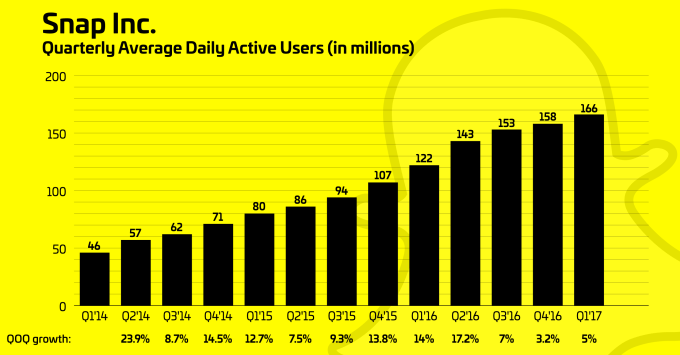
If Facebook’s goal was stop Snap in its tracks, it’s largely succeeded with Instagram Stories. Snapchat’s monthly active user growth rate has plummeted from 17.2% per quarter to just 5%, while Snap’s share price has fallen from its $17 IPO to $13. Instagram Stories now has 250 million daily users compared to Snapchat’s 166 million. Instagram’s usage per day beats the “more than 30 minutes per day” of usage Snapchat claims on average now, as well as the over 30 minutes per day for under 25s and 20 minutes per day for over 25s Snap cited in its IPO filing.
[Update: News of Instagram surpassing Snapchat’s daily usage has caused Snap’s share price to sink to an all-time low aroun $12.67]
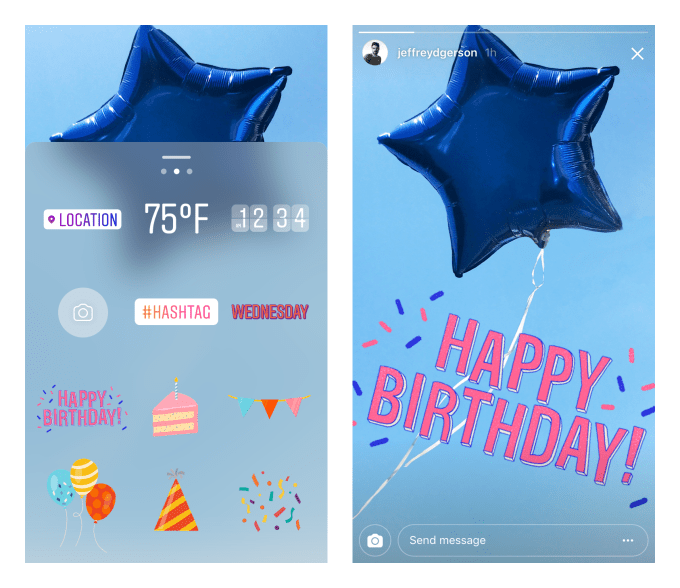
It’s clear to see why users are flocking to Instagram. It has stolen some of Snap’s primary use cases and party tricks. Instagram’s most popular augmented reality filter is the same as the Snap one it copied: virtual puppy ears. Also in the top five Instagram face filters are bunny ears at #3 and Koala ears at #5, both inspired by the meme-worthy popularity of Snap’s dog face. Meanwhile, Instagram keeps iterating with new features and sticker packs, like the one below to celebrate Instagram Stories’ first birthday.
Instagram is actually getting more efficient at copying Snapchat. While it took almost 3 years to launch its own version of Stories, Instagram needed just 4 months to copy Snapchat’s create-your-own-stickers feature launched in April.
Instagram not only copied Snapchat’s Stories, but has turned its Instagram Direct feature into a full-fledged Snapchat ephemeral private messaging competitor. By allowing people to send quick visual messages that disappear, Instagram Direct has grown to 375 million monthly users. Snap’s influence has helped Instagram’s chat feature one of the most popular messaging apps in the world behind WhatsApp, Messenger, and WeChat. Now one in five Instagram Stories posted by a business receives a Direct Message reply, allowing Instagram to seduce advertisers who want private channels for communicating with customers.
Instagram writes that “Stories made Instagram a place for people to share all of their moments – the highlights and everything in between”. If CEO Kevin Systrom set out to make Instagram an app for displaying everything fun in your life, not just the perfectly polished meals and vacations, it’s succeeded. And for better or worse, Instagram Stories has emboldened Facebook to put Stories into all its apps. WhatsApp Status has boomed to 250 million daily users, while Facebook Stories and Messenger Day are seeing weaker traction since they’re respectively redundant or obtrusive.
The flood of apps where you can post them is creating ‘Stories fatigue’ in some users like me. If the audience is fractured across five different apps and I have to go through a ton of work to post to them all, I sometimes reconsider whether it’s worth disrupting life in the present in order to show off to my friends. So while Instagram and Facebook are further popularizing the Stories format Snap invented, they may also be commoditizing it. Either way, the Snap threat is being neutralized.

Snapchat’s iconic flower crown face filter on the right, and Instagram’s good-enough clone on the left.
Unless Snap can pull off a big uptick in growth when it reports earnings later this quarter, it may see Wall Street sour on its future the same way it did with Twitter. But you can bet Instagram won’t let up the heat.
A year ago, it looked like Snapchat was destined to rule social media. Its full-screen sharing would be impossible to outdo. There was no way to give a more immersive window into friends’ lives. But Facebook and Instagram didn’t have to outdo Snapchat. They just needed to copy it and put it in a more convenient place in apps that people of all ages already use.
More@ https://www.technapping.com
Source: Techcrunch
Comments
Post a Comment