
Google is expanding its Africa initiatives, on the back of CEO Sundar Pichai’s recent trip to Nigeria.
While visiting Lagos, he announced the global internet services company’s plans to train 10 million Africans in digital skills over the next five years.
Alphabet will also increase its funding to African startups, provide $20 million in grants to digital nonprofits, and offer modified versions of products (such as YouTube) in Africa ― where internet users can face costlier data plans and slower download speeds than other Google markets.
“A lot of what we’re doing is making it easier for the average person to take advantage of the web,” Bunmi Banjo, Google’s Growth Engine and Brand Lead for Sub-Saharan Africa, told TechCrunch.
“Our CEO wants people across the continent to know that Google’s here to stay,” she said of Pichai’s visit and announcements.
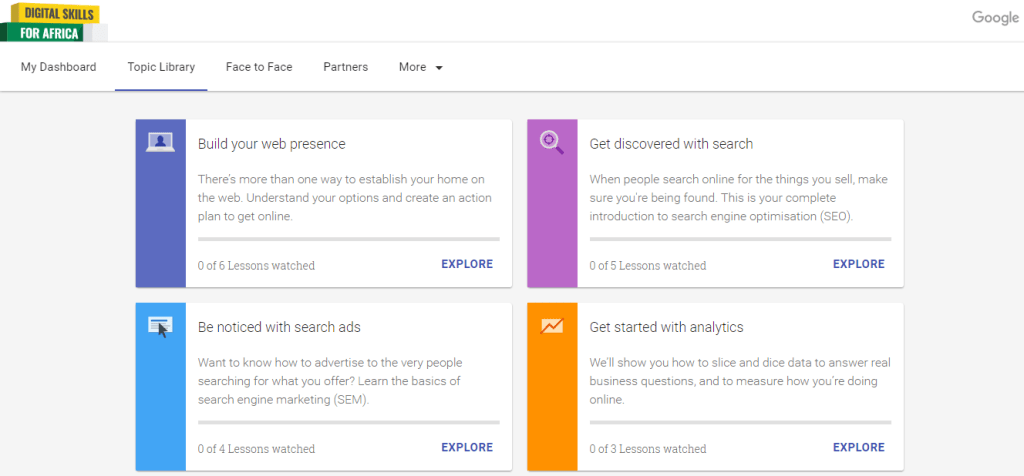
The company’s pledge to train 10 million falls under its Digital Skills for Africa initiative, which debuted in April 2016. The program offers online and face to face instruction to individuals and small businesses through 15 partners across 27 African countries. Anyone can register for free and set an individualized plan across three primary categories: business development, career advancement or basic internet use.
Speaking at a Google for Nigeria event in Lagos, Pichai underscored the benefits for African SMEs of going digital. “We’ve been taking people doing small businesses, [such as] a side hustle in Nigeria…to leverage digital platforms to reach more people and grow. For example, a small tailor in Nigeria can learn to put [their] shop on Google Maps so others can find them and more people come to shop,” he said.
Pichai also announced Google.org’s allocation of $20 million in grants over the next five years to nonprofits “working to improve lives across Africa.” Initial funds of $2.5 million were given to Nigerian professional development startup Gidi Mobile and South Africa math and science venture Siyavula. Google.org will also launch an African Impact Challenge in 2018, offering $5 million in grants to nonprofit innovators.
After Google opened its Launchpad Accelerator to African startups in March, Pichai inaugurated a new Launchpad Space in Lagos with fresh commitments to the continent’s startups. The program will offer $3 million in equity-free funding and mentorship to 60 African startups over the next three years.
While in Nigeria, Pichai also announced initiatives to improve use of Google products in Africa. Alphabet is testing YouTube Go in Nigeria, an app that allows for more offline and slow network video viewership. Google also upgraded its Maps app for Lagos and is offering African users a browsing feature that “streamlines search results so they load…with 90 percent less data and five times faster, even on low storage devices.”
Google’s CEO visit and new Africa initiatives follow a period of elevated interest by blue chip tech names in the continent. Facebook’s Mark Zuckerberg toured innovation hubs in Kenya and Nigeria in 2016. The last year and a half also saw Africa expansion by eBay, Uber IBM and Netflix, and the minting of Africa’s first unicorn ― Jumia ― backed by investors including Goldman Sachs.
More@ https://www.technapping.com
Source: Techcrunch
Comments
Post a Comment